Stone Dust vs Crusher Dust: Complete Guide to Differences, Uses & Applications
Understanding the differences between stone dust and crusher dust helps you choose the right paver base material, leveling compound, or construction aggregate for your project.
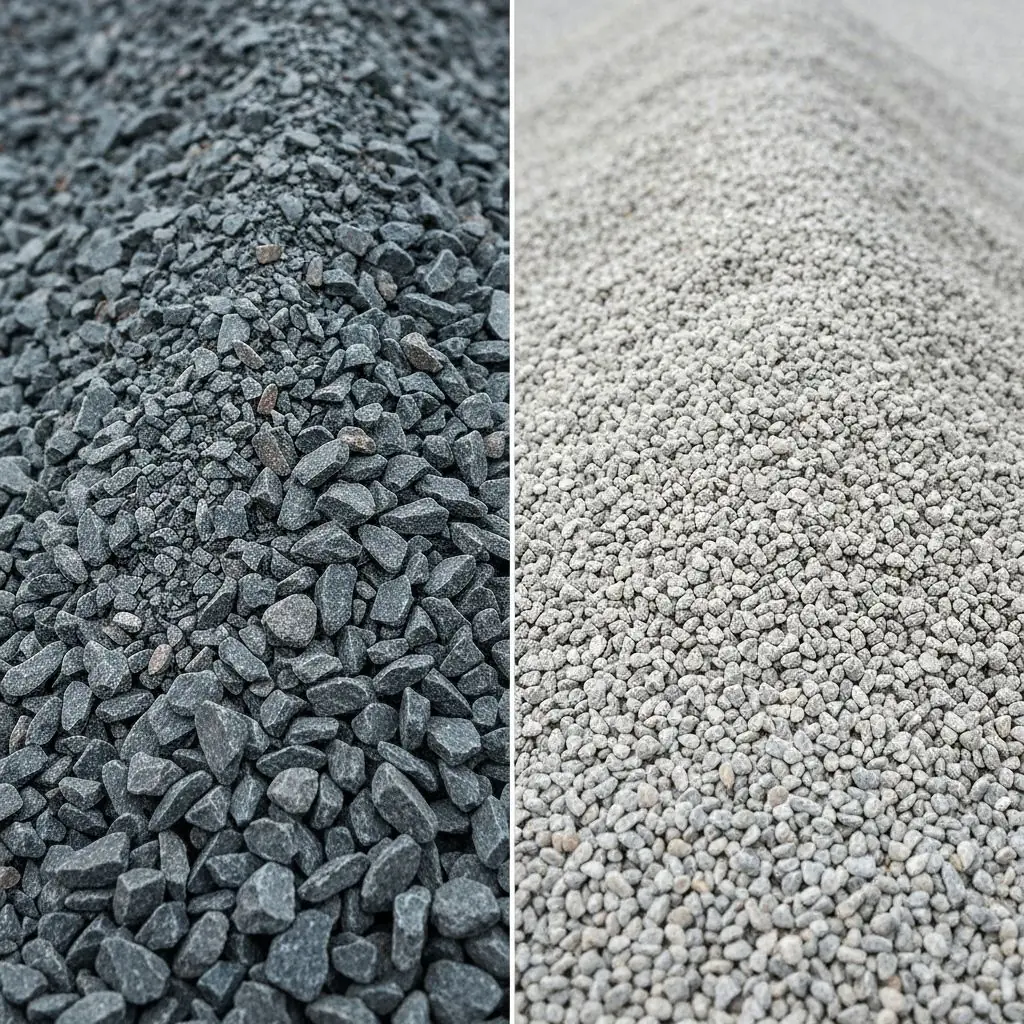
When planning a paver installation, pathway project, or construction base, you'll encounter terms like "stone dust," "crusher dust," "stone screenings," and "quarry fines" used interchangeably. While these fine aggregate materials are similar, understanding their subtle differences helps you make informed decisions and achieve better results for your paver base, leveling layer, or compacted foundation.
Quick Comparison: Stone Dust vs Crusher Dust
| Property | Stone Dust | Crusher Dust |
|---|---|---|
| Particle Size | Under 1/4" | Under 1/4" (may vary) |
| Screening | Well-screened, uniform | Less processed |
| Particle Shape | More rounded | More angular |
| Compacted Density | 1.4 tons/cubic yard | 1.4 tons/cubic yard |
| Cost per Ton | $20-$40 | $15-$35 |
| Best For | Paver bases, leveling | General bases, backfill |
What is Stone Dust?
Stone dust, also known as stone screenings, stone fines, or quarry dust, is a fine-grained aggregate material created when larger stones are crushed into smaller pieces at quarries and stone processing facilities. It consists of particles smaller than 1/4 inch, with most particles being much finer—similar to coarse sand but with more angular particles that interlock when compacted.
Stone dust is produced from various types of stone, including limestone, granite, trap rock, and bluestone. When properly compacted with a plate compactor, it creates a dense, stable base that locks together, making it ideal for paver installations, flagstone patios, and pathway foundations. The material has a density of approximately 1.4 tons per cubic yard when compacted, or about 2,800 pounds per cubic yard.
What is Crusher Dust?
Crusher dust is essentially the same material as stone dust but specifically refers to the fine particles produced during the rock crushing process. The term "crusher dust" emphasizes the manufacturing process at the crushing plant, while "stone dust" refers to the final screened material. In practice, both terms often describe the same product, though regional terminology varies.
However, crusher dust may sometimes contain slightly more angular particles or have variations inparticle size distribution depending on the crushing equipment, screening process, and source material. Some suppliers use the terms interchangeably, while others distinguish between them based on particle size, screening level, or processing stage. Crusher run is a related product that includes both fine dust and larger crushed stone particles.
Key Similarities Between Stone Dust and Crusher Dust
Both stone dust and crusher dust share these important characteristics:
- Fine particle size: Both materials consist of particles smaller than 1/4 inch, with most being much finer (passing through window screen mesh)
- Excellent compaction properties: Both compact tightly when properly tamped with a plate compactor, creating a stable, load-bearing base
- Similar density: Both weigh approximately 1.4 tons per cubic yard when compacted (2,800 lbs/cy)
- Same applications: Both are suitable for paver bases, pathway foundations, leveling applications, and backfill material. See our guide on stone dust under pavers for installation details.
- Adequate drainage: Both provide drainage while maintaining stability when properly compacted
Key Differences
While similar, there are subtle differences to consider:
| Characteristic | Stone Dust | Crusher Dust |
|---|---|---|
| Particle Shape | More rounded, screened | Slightly more angular |
| Screening | Typically well-screened | May have more variation |
| Availability | Widely available | Common in some regions |
| Cost | Similar pricing | Similar pricing |
Best Uses for Each Material
Stone Dust Applications
- Paver base installations (most common use)
- Pathway and walkway foundations
- Leveling material under retaining walls
- Base for flagstone and natural stone patios
- Filling gaps between pavers (when properly compacted)
Crusher Dust Applications
- Same applications as stone dust
- Road base material in some regions
- Drainage applications
- Backfill material for construction projects
Using Under Pavers
Both stone dust and crusher dust work excellently under pavers when properly installed. The key is proper preparation and compaction:
- Excavate to proper depth: Remove soil to accommodate pavers, sand layer, and 1 inch of base material
- Spread base material: Apply 1 inch of stone dust or crusher dust and level carefully
- Compact thoroughly: Use a plate compactor to achieve 95% compaction
- Add sand layer: Place 1 inch of sand on top of the compacted base
- Install pavers: Set pavers in the sand layer, not directly on the base
For accurate material calculations, use our stone dust calculator to determine exactly how much you need for your project. For step-by-step calculation instructions, see how much stone dust do I need.
Stone Dust and Crusher Dust Density Guide
Understanding the density and weight of these materials is crucial for accurate ordering:
- Loose density: 1.2-1.3 tons per cubic yard (2,400-2,600 lbs/cy)
- Compacted density: 1.4 tons per cubic yard (2,800 lbs/cy)
- Weight per cubic foot: Approximately 100-105 pounds
- Compaction rate: Approximately 10-15% volume reduction when compacted
When calculating quantities, always use the compacted density (1.4 tons per cubic yard) to ensure you order enough material. The unit weight of stone dust is approximately 2,800 pounds per cubic yard when compacted. Use our stone dust calculator for accurate quantity estimates.
Which Should You Choose?
For most projects, either material will work well. Consider these factors when choosing:
Choose Stone Dust If:
- You need a well-screened, consistent material
- Your supplier specifically offers "stone dust"
- You want the most commonly recommended material
Choose Crusher Dust If:
- It's more readily available in your area
- Your supplier uses this terminology
- Cost is similar and quality is good
Important Installation Tips
Regardless of which material you choose, follow these best practices:
- Moisture content: Slightly damp material compacts better than bone dry or saturated material
- Compaction: Use a plate compactor and make multiple passes for optimal density
- Thickness: Maintain consistent 1-inch depth for paver bases
- Leveling: Use a screed board to achieve a perfectly level surface before compacting
- Order extra: Always order 10% more than calculated to account for compaction and waste
Related Guides
Calculate Your Material Needs
Use our free calculator to determine exactly how much stone dust or crusher dust you need for your project.
Calculate Now →