How Much Crushed Stone Do I Need? Calculator & Guide
Calculate exactly how much crushed stone you need for driveways, patios, pathways, and construction projects. Complete guide with step-by-step calculations and professional tips.
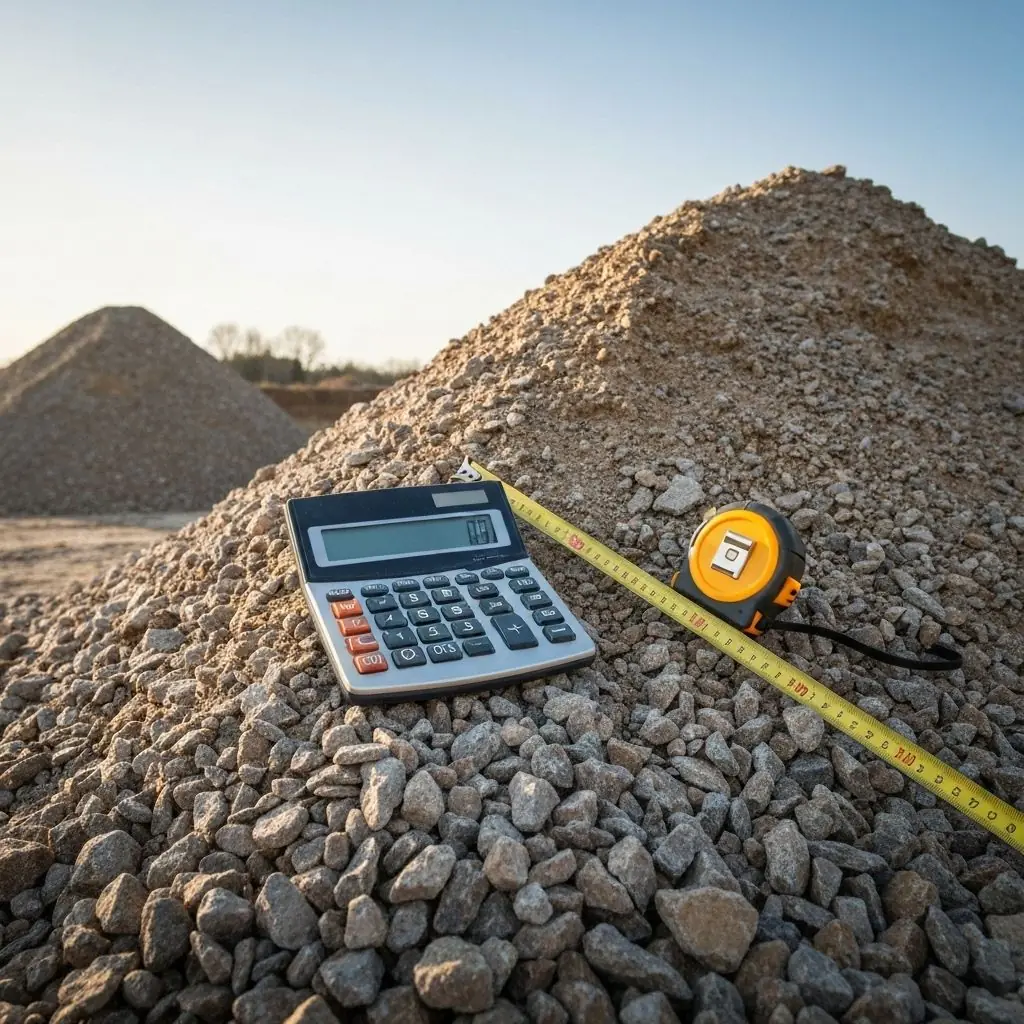
Crushed stone is one of the most versatile materials for construction and landscaping projects. Whether you're building a driveway, creating a patio base, or installing a pathway, calculating the correct amount ensures you have enough material without over-ordering. This comprehensive guide walks you through the exact calculations needed for accurate material estimation.
Understanding Crushed Stone
Crushed stone is made by crushing larger rocks into smaller pieces, typically ranging from fine dust to 2.5 inches in diameter. The most common sizes include 3/4 inch (most popular for driveways), 1/2 inch, and 1 inch. The material compacts well and provides excellent drainage, making it ideal for base layers and surface applications.
Crushed stone is typically sold by weight (tons) or volume (cubic yards). One cubic yard weighs approximately 1.4 tons, though this varies slightly based on stone type and moisture content. Our crushed stone calculator handles these conversions automatically for quick, accurate results. For projects specifically using 3/4" stone, see our dedicated guide on how much 3/4 stone you need.
Step-by-Step Calculation Method
Step 1: Measure Your Project Area
Measure the length and width of your project area in feet. For irregular shapes, break the area into rectangles and calculate each section separately. Use a measuring tape or wheel for accuracy, and always measure twice to confirm your numbers.
Step 2: Determine Required Depth
The depth depends on your project type:
- Driveways: 4-6 inches (0.33-0.5 feet) for residential, 6-8 inches for heavy-duty
- Patios: 3-4 inches (0.25-0.33 feet) for base material
- Pathways: 2-3 inches (0.17-0.25 feet) for decorative applications
- Drainage: 4-6 inches (0.33-0.5 feet) for French drains and drainage systems
Convert inches to feet by dividing by 12. For example, 4 inches = 4÷12 = 0.33 feet.
Step 3: Calculate Cubic Feet
Multiply length × width × depth (all in feet) to get cubic feet.
Formula: Cubic Feet = Length (ft) × Width (ft) × Depth (ft)
Example: 20 ft × 10 ft × 0.33 ft (4 inches) = 66 cubic feet
Step 4: Convert to Cubic Yards
Divide cubic feet by 27 to convert to cubic yards (1 cubic yard = 27 cubic feet).
Formula: Cubic Yards = Cubic Feet ÷ 27
Example: 66 cubic feet ÷ 27 = 2.44 cubic yards
Step 5: Add Extra for Compaction
Crushed stone compacts 10-15% when properly installed. Always add 10% extra to your calculated amount, then round up to the nearest quarter yard.
Formula: Final Cubic Yards = (Cubic Yards × 1.1) rounded up
Example: 2.44 × 1.1 = 2.68 cubic yards (order 2.75 yards)
Step 6: Convert to Tons (if needed)
If your supplier sells by weight, multiply cubic yards by 1.4 to get tons.
Formula: Tons = Cubic Yards × 1.4
Example: 2.68 cubic yards × 1.4 = 3.75 tons (order 4 tons)
Practical Examples
Example 1: Driveway Project
Dimensions: 50 feet long × 12 feet wide × 4 inches deep
Calculation: 50 × 12 × (4÷12) = 200 cubic feet
Cubic Yards: 200 ÷ 27 = 7.41 cubic yards
With 10% extra: 7.41 × 1.1 = 8.15 cubic yards (order 8.25 yards)
In Tons: 8.15 × 1.4 = 11.4 tons (order 12 tons)
Example 2: Patio Base
Dimensions: 15 feet × 15 feet × 3 inches deep
Calculation: 15 × 15 × (3÷12) = 56.25 cubic feet
Cubic Yards: 56.25 ÷ 27 = 2.08 cubic yards
With 10% extra: 2.08 × 1.1 = 2.29 cubic yards (order 2.5 yards)
Coverage Reference Table
Use this table to estimate how much area different quantities of crushed stone cover:
| Quantity | 2 inches | 3 inches | 4 inches | 6 inches |
|---|---|---|---|---|
| 1 cubic yard | 162 sq ft | 108 sq ft | 81 sq ft | 54 sq ft |
| 1 ton | 116 sq ft | 77 sq ft | 58 sq ft | 39 sq ft |
| 5 cubic yards | 810 sq ft | 540 sq ft | 405 sq ft | 270 sq ft |
Calculating from Square Feet
If you know your area in square feet, the calculation is straightforward:
Formula: Cubic Yards = (Square Feet × Depth in feet) ÷ 27
Example: 300 sq ft × (4÷12) = 100 cubic feet ÷ 27 = 3.7 cubic yards
This method is perfect when you have the total area but need to calculate volume. Our crushed stone calculator square feet tool handles these calculations automatically.
Important Considerations
When calculating crushed stone quantities, account for these factors:
- Compaction: Crushed stone compacts 10-15% when properly installed. Always add 10% extra to your calculated amount.
- Irregular surfaces: Uneven ground requires more material to achieve a level surface. Add 5-10% for surface variations.
- Waste and spillage: Account for material lost during transport and spreading. Add 5% for handling waste.
- Stone size: Larger stones (1 inch) require slightly more volume than smaller stones (3/4 inch) for the same coverage. Learn more about calculating stone coverage.
- Moisture content: Wet stone weighs more than dry stone, affecting tonnage calculations.
Using Our Crushed Stone Calculator
While manual calculations help you understand the process, our free crushed stone calculator provides instant, accurate results. Simply enter your project dimensions, select the depth, and get results in cubic yards, cubic feet, and tons.
The calculator automatically accounts for compaction factors and provides recommendations for ordering extra material based on your project type. It also handles conversions between different units and stone sizes, saving you time and reducing calculation errors.
Tips for Accurate Ordering
- Measure multiple times: Verify all dimensions before calculating to avoid costly errors.
- Add 10-15% extra: Account for compaction, waste, and irregular surfaces by ordering slightly more than calculated.
- Round up to standard increments: Order in quarter-yard increments (0.25, 0.5, 0.75) for easier delivery.
- Consider delivery minimums: Many suppliers have minimum delivery quantities (typically 3-5 cubic yards). Plan accordingly.
- Verify stone type: Different stone types have different weights per cubic yard, affecting delivery costs.
Calculate Your Crushed Stone Needs Now
Use our free crushed stone calculator to get instant, accurate estimates for your project. No signup required!
Calculate Crushed Stone →