
French Drain Gravel Calculator: Complete Guide
Calculate exactly how much gravel you need for French drain installation. Learn step-by-step calculations, material requirements, and professional installation techniques.
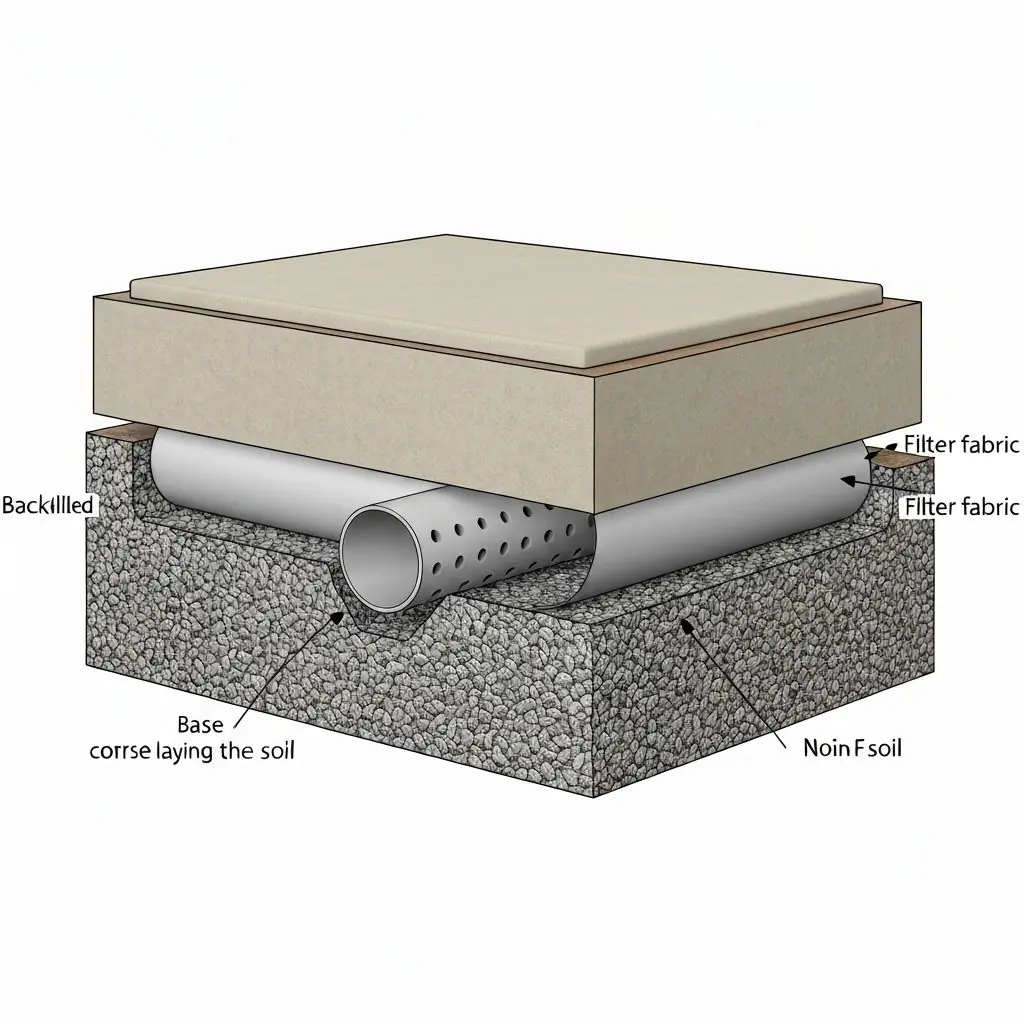
French drains are effective solutions for managing water drainage around foundations, driveways, and landscapes. The key to a successful installation is using the correct amount of gravel to ensure proper water flow and system longevity. This comprehensive guide shows you exactly how to calculate gravel quantities for your French drain project.
Understanding French Drain Components
A French drain consists of several key components, each requiring specific calculations:
- Perforated pipe: Typically 4-inch diameter, sits on a gravel bed
- Drainage gravel: Surrounds the pipe and provides water flow path
- Filter fabric: Wraps around gravel to prevent soil infiltration
- Sand layer (optional): 2-3 inch top layer before backfilling
The gravel layer is the most material-intensive component, typically requiring 8-12 inches of coverage around the pipe. Our French drain stone calculator simplifies these calculations for quick, accurate results.
Related Guides
Standard French Drain Dimensions
Most French drains follow these standard dimensions:
- Trench depth: 18-24 inches (1.5-2 feet)
- Trench width: 12-18 inches (1-1.5 feet)
- Gravel depth under pipe: 2-3 inches
- Gravel depth over pipe: 8-12 inches
- Total gravel depth: 10-15 inches (0.83-1.25 feet)
These dimensions ensure adequate drainage capacity while maintaining structural integrity. Adjustments may be needed based on local soil conditions and water flow requirements.
Step-by-Step Calculation Method
Step 1: Measure Trench Length
Measure the total length of your French drain run in feet. Include any curves or angles in your measurement. For example, a drain running 50 feet along a foundation.
Step 2: Determine Trench Dimensions
Standard dimensions are 18 inches deep and 12 inches wide. Convert to feet: 18 inches = 1.5 feet, 12 inches = 1 foot.
Step 3: Calculate Cubic Feet
Multiply length × width × depth (all in feet) to get cubic feet of gravel needed.
Formula: Cubic Feet = Length (ft) × Width (ft) × Depth (ft)
Example: 50 ft × 1 ft × 1.5 ft = 75 cubic feet
Step 4: Convert to Cubic Yards
Divide cubic feet by 27 to get cubic yards (1 cubic yard = 27 cubic feet).
Formula: Cubic Yards = Cubic Feet ÷ 27
Example: 75 cubic feet ÷ 27 = 2.78 cubic yards
Step 5: Add Extra for Compaction
Add 10-15% extra to account for compaction. Multiply cubic yards by 1.15, then round up.
Formula: Final Cubic Yards = (Cubic Yards × 1.15) rounded up
Example: 2.78 × 1.15 = 3.2 cubic yards (order 3.5 yards)
Step 6: Convert to Tons (if needed)
If ordering by weight, multiply cubic yards by 1.4 to get tons (gravel weighs approximately 1.4 tons per cubic yard).
Formula: Tons = Cubic Yards × 1.4
Example: 3.2 cubic yards × 1.4 = 4.5 tons
Quick Reference Table
Use this table to estimate gravel needs for common French drain lengths:
| Length (ft) | Cubic Yards | Tons | Cubic Feet |
|---|---|---|---|
| 25 | 1.4 | 2.0 | 38 |
| 50 | 2.8 | 3.9 | 75 |
| 75 | 4.2 | 5.9 | 113 |
| 100 | 5.6 | 7.8 | 150 |
Note: Based on 18-inch deep, 12-inch wide trench. Values include 15% extra for compaction.
Best Gravel Types for French Drains
Not all gravel works well for French drains. Choose the right type for optimal performance:
- 3/4 inch clean crushed stone: Best choice - provides excellent drainage and prevents clogging
- 1 inch river rock: Good alternative - natural rounded stones that drain well
- Drainage stone (57 stone): Specifically designed for drainage applications
- Avoid pea gravel: Too small, compacts tightly and reduces drainage efficiency
Installation Best Practices
Follow these professional tips for successful French drain installation:
- Excavate properly: Dig trench to proper depth with slight slope (1 inch per 8 feet) away from structure
- Install filter fabric: Line trench with landscape fabric before adding gravel to prevent soil infiltration
- Add base gravel: Place 2-3 inches of gravel, then set perforated pipe with holes facing down
- Cover with gravel: Add 8-12 inches of gravel over pipe, ensuring complete coverage
- Wrap with fabric: Fold filter fabric over gravel to create a complete barrier
- Backfill: Add sand layer (optional) then soil, maintaining proper slope
Common Calculation Mistakes
Avoid these errors that lead to insufficient material:
- Forgetting compaction: Always add 10-15% extra for material compaction
- Incorrect depth: Measure actual trench depth, not planned depth
- Unit conversion errors: Ensure all measurements are in the same units (feet)
- Not accounting for curves: Measure actual length including all curves and angles
- Underestimating width: Measure actual trench width, which may be wider than planned
Additional Materials Needed
Beyond gravel, you'll need these materials for a complete French drain:
- Perforated pipe: 4-inch diameter, length matches drain length
- Filter fabric: Width = (trench width + 2 × depth) for proper wrapping
- Sand (optional): 2-3 inches = length × width × 0.25 feet ÷ 27 = cubic yards
- Pipe fittings: Elbows, connectors, and end caps as needed
- Outlet protection: Pop-up emitter or splash block for drain end
Calculate Your French Drain Gravel Needs
Use our free French drain calculator to get instant, accurate estimates for your drainage project.
Calculate Gravel →